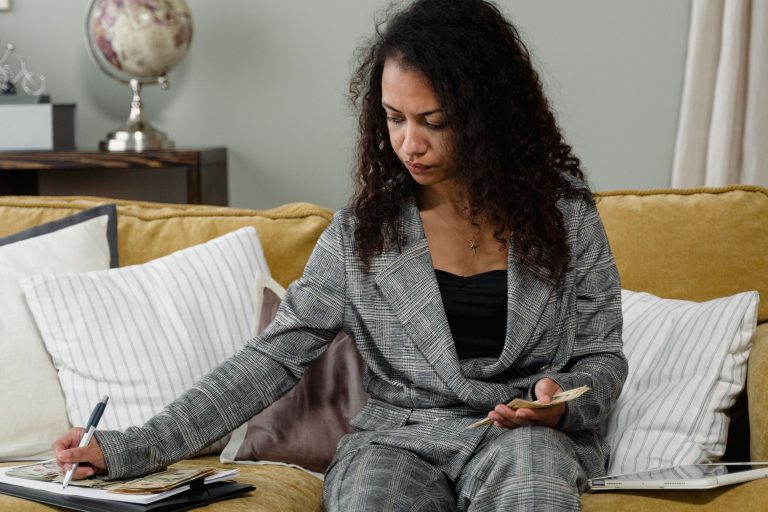
For many women, building a career is a major part of discovering who they are. They work hard, develop skills, take on responsibilities, pursue promotions, build businesses, meet deadlines, and create goals for themselves. A career can provide independence, confidence, purpose, and a sense of accomplishment.
Then motherhood arrives, and everything can change.
The transition from career woman to mother is often described as if a woman has simply moved from one role to another. In reality, becoming a mother can completely reshape her priorities, identity, schedule, relationships, and definition of success. The woman who once measured her days by meetings and deadlines may suddenly measure them by school schedules, bedtime routines, milestones, and the needs of a child.
But motherhood does not erase the woman who existed before. Her ambition, intelligence, resilience, creativity, leadership, and determination remain part of who she is.
In many cases, becoming a mother reveals strengths she never knew she possessed.
Motherhood Is Not the End of Ambition
One of the most persistent misconceptions about motherhood is that becoming a parent means giving up ambition.
For some women, motherhood does involve stepping away from a traditional career for a period of time. Others continue working full-time, start businesses, work remotely, change careers, or find new ways to pursue professional goals.
There is no single correct path.
A woman can love being a mother and still miss her career. She can be proud of her professional accomplishments and still want to spend more time with her children. She can choose to stay home and still be ambitious. She can return to work and still be deeply devoted to her family.
Motherhood does not have to fit into one definition.
A woman’s ambitions can change without disappearing.
The Identity Shift From Professional to Parent
Before becoming a mother, a woman’s professional identity may be closely connected to her sense of self.
She might introduce herself through her profession, achievements, business, education, or career goals. After having a child, conversations can suddenly revolve around parenting.
For some women, this transition feels natural. For others, it can be surprisingly difficult.
There can be a sense of losing a familiar identity while trying to build a new one.
The important thing to remember is that motherhood adds another dimension to a woman’s identity. It does not have to replace everything that came before.
She is still the professional who worked hard for her achievements. She is still the friend, daughter, partner, creator, entrepreneur, and individual she was before becoming a mother.
She is now also a mother.
The Skills From a Career Don’t Disappear
A woman’s professional experience can become incredibly valuable in motherhood.
Time management becomes essential when balancing meals, appointments, school schedules, household responsibilities, and personal needs. Communication skills become important when navigating relationships and parenting decisions.
Problem-solving becomes an everyday requirement.
Leadership takes on a completely different meaning.
The ability to remain calm under pressure can become one of the most valuable skills a mother develops.
A woman who has spent years managing projects, working with clients, meeting deadlines, solving workplace problems, or leading teams may discover that many of those skills transfer into parenting.
Motherhood may require an entirely different kind of leadership, but the skills developed through a career can still matter.
Motherhood Develops a Different Kind of Strength
Professional success can teach women how to compete, negotiate, lead, and achieve.
Motherhood often teaches something different: patience, adaptability, emotional awareness, persistence, and unconditional responsibility.
A child does not care about a mother’s job title.
A child needs someone who will show up, listen, comfort, teach, encourage, and keep going even when the day has been exhausting.
That requires strength.
There are days when motherhood can feel repetitive and invisible. Preparing meals, cleaning, helping with schoolwork, organizing schedules, comforting a child, and managing household responsibilities may not come with a paycheck or professional recognition.
Yet these tasks can require enormous effort.
The absence of a traditional career title does not mean the absence of meaningful work.
The Working Mother Carries Two Worlds
For women who return to work after becoming mothers, the challenge can become even more complicated.
They may spend the morning preparing their children for the day, work for several hours, answer professional messages, attend meetings, and then return home to another round of responsibilities.
The workday does not necessarily end when the professional schedule ends.
There may still be dinner, homework, laundry, household planning, bedtime routines, and emotional support.
Working mothers often move between professional and family roles throughout the same day.
That constant transition requires extraordinary adaptability.
It is one reason working mothers deserve recognition—not because they are expected to do everything perfectly, but because they are often navigating competing responsibilities while trying to care for themselves and the people they love.
The Invisible Work of Motherhood
One of the most overlooked parts of motherhood is the mental load.
Motherhood often involves remembering details that other people may never notice.
Which day is the school activity? Does the child need a special outfit? Is there enough food at home? When is the next appointment? What needs to be purchased? What homework is due? Who needs to be contacted?
These responsibilities may not always be visible, but they require constant mental attention.
For working mothers, this mental load can exist alongside professional responsibilities.
Recognizing this invisible work is important because motherhood should not be measured only by visible tasks.
Sometimes the hardest part is simply keeping everything in your head.
The Pressure to Do Everything Perfectly
Women often face unrealistic expectations about what it means to be a “good mother.”
They may feel pressure to provide healthy meals, maintain a clean home, support their children’s education, stay emotionally available, maintain relationships, look presentable, succeed professionally, and somehow find time for themselves.
Social media can make this pressure even stronger.
Beautiful family photos and carefully organized homes can create the impression that other mothers have everything under control.
The reality is much more complicated.
Every mother has difficult days. Every family has challenges. Every woman has moments when she feels tired, uncertain, or overwhelmed.
Being a strong mother does not mean being perfect.
It means continuing to show up while recognizing that imperfection is part of being human.
Choosing Motherhood Does Not Mean Losing Yourself
One of the healthiest things a woman can do after becoming a mother is continue making space for her own identity.
That might mean maintaining a career, pursuing education, exercising, spending time with friends, enjoying hobbies, traveling, building a business, or simply having quiet time alone.
Self-care is not selfish.
A mother is still a person with interests, dreams, needs, and goals.
When women are encouraged to maintain parts of themselves outside motherhood, they may feel more fulfilled and better equipped to manage the demands of family life.
Motherhood is an important part of a woman’s identity, but it does not have to be her entire identity.
Redefining What Success Looks Like
Before motherhood, success might mean earning a certain salary, reaching a professional position, launching a business, receiving recognition, or achieving financial independence.
After becoming a mother, the definition of success may change.
Success might mean being present for an important milestone. It might mean creating a stable home. It might mean finding a healthier balance between work and family.
For some women, success may mean returning to the career they love.
For others, it may mean building a flexible business that allows them to spend more time with their children.
There is no universal definition.
The important thing is that women should have the freedom to define success for themselves.
Returning to Work After Motherhood
Returning to work after having children can be an emotional experience.
A woman may feel excited to reconnect with her professional identity while also feeling guilty about leaving her child.
She may worry that she has fallen behind professionally or that colleagues have progressed while she was away.
These concerns are understandable, but taking time away from a career does not erase everything a woman has accomplished.
Skills can be refreshed. Professional networks can be rebuilt. New opportunities can emerge.
Most importantly, motherhood itself may have strengthened qualities that are valuable in the workplace.
Patience, organization, resilience, prioritization, communication, and problem-solving are not small skills.
Career Changes Can Become New Beginnings
Motherhood can also inspire women to rethink what they want from their careers.
Some women return to the same profession. Others decide that their previous career no longer fits their priorities.
A mother may choose a flexible position, start freelancing, launch a business, work from home, reduce her hours, or pursue an entirely different career.
Changing direction is not failure.
Sometimes a major life transition provides an opportunity to ask important questions.
What kind of life do I want? What matters most to me? How do I want to spend my time? What kind of example do I want to set for my children?
These questions can lead to meaningful changes.
Mothers Are Role Models for Their Children
Children learn from what they see.
When children watch their mothers work hard, solve problems, pursue goals, care for others, and overcome challenges, they see a powerful example of resilience.
When children see their mothers set boundaries, rest, learn new things, and pursue interests, they learn that adulthood does not mean giving up individuality.
A mother does not have to be perfect to be a role model.
Her willingness to keep learning and growing can be more meaningful than perfection.
Strength Can Look Different After Motherhood
Before motherhood, strength might have meant speaking confidently in a meeting, taking a professional risk, or working toward an ambitious goal.
After motherhood, strength may look like staying patient during a difficult morning, advocating for a child, starting over professionally, or admitting that help is needed.
Strength can also mean saying no.
It can mean recognizing that doing everything alone is unsustainable.
It can mean asking a partner, family member, friend, or professional for support.
True strength is not always about carrying more. Sometimes it is knowing when you should not have to carry everything alone.
The Importance of Support
Women should not be expected to navigate motherhood entirely by themselves.
Support from partners, family members, friends, employers, communities, and other parents can make a meaningful difference.
Workplaces can also play an important role by offering reasonable flexibility and recognizing that employees may have responsibilities outside of work.
A supportive environment does not make a woman less capable.
It can give her the resources she needs to thrive.
Celebrating Every Version of a Woman
There is sometimes a tendency to compare different versions of motherhood.
The woman who stays home may feel judged for not working.
The woman who works may feel judged for not spending enough time at home.
The woman who runs a business may feel pressure to prove she is still present for her children.
The woman who takes a career break may worry that she is falling behind.
These comparisons are unnecessary.
Every woman has different circumstances, priorities, resources, and goals.
Female empowerment means giving women room to make choices about their own lives without treating one path as superior to another.
Motherhood Can Make a Woman More Powerful, Not Less
A woman who becomes a mother does not become less capable.
In many ways, she may become more aware of her strengths.
She learns how to function on limited sleep, manage unpredictable situations, make decisions quickly, advocate for someone else, and continue moving forward when plans change.
She may discover patience she never knew she had and resilience she never expected to need.
These experiences can change the way she approaches everything—from relationships to work to personal goals.
Motherhood does not necessarily make life easier.
It can make a woman stronger in ways she never anticipated.
You Can Be Both
Perhaps one of the most important messages for mothers is that they do not have to choose between being a mother and being a woman with dreams.
You can love your children and love your career.
You can enjoy staying home and still have professional ambitions.
You can want a promotion and want more family time.
You can be proud of your accomplishments before motherhood and proud of the person you became afterward.
These identities can exist together.
A woman does not have to erase one part of herself to make room for another.
Final Thoughts
The journey from career woman to mother is not simply a change in job description. It can be one of the biggest personal transformations a woman experiences.
She may move from professional meetings to midnight feedings, from career goals to school schedules, from managing projects to managing an entirely new kind of responsibility.
But the woman she was before motherhood is still there.
Her ambition is still there. Her intelligence is still there. Her creativity, determination, leadership, and dreams are still there.
Motherhood adds to her story rather than erasing everything that came before.
Whether she returns to the workplace, stays home, builds a business, changes careers, or creates a combination that works uniquely for her, her choices deserve respect.
A mother’s strength is not measured by how much she can carry without help or how perfectly she manages every responsibility. It is found in her ability to adapt, love, grow, learn, and continue moving forward.
She may have changed her title, her schedule, and her priorities—but she did not stop being a powerful woman.
She simply became a different kind of strong.