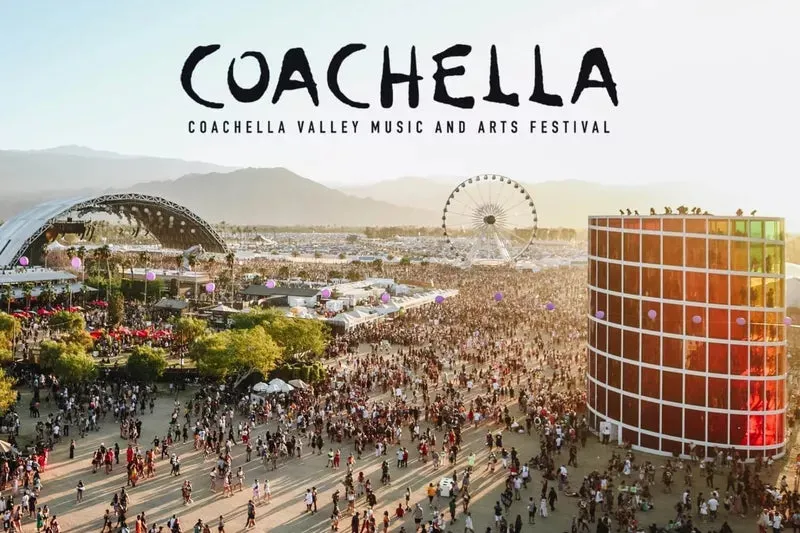
At the Coachella Valley Music and Arts Festival, the 2026 cycle doesn’t just reflect music trends—it reflects how culture itself is now built, consumed, and remembered. The defining takeaway isn’t about setlists or technical performance anymore. It’s about how moments outperform music, how viral fragments outperform full shows, and how narrative consistently overrides reality in shaping what people think they saw.
The shift begins with attention itself. In a live environment saturated with stimulation, audiences are no longer engaging with performances as continuous experiences. Instead, they are extracting highlights—isolated seconds that carry emotional, visual, or social weight. These fragments become the primary unit of cultural memory. A full performance may exist, but what survives in discourse are the clipped moments that circulate across platforms.
This is where “moments over music” becomes more than a phrase—it becomes structure. A moment is designed to be shareable. It is immediate, visually distinct, and easily detached from context. Music, by contrast, unfolds over time. It requires sustained attention. In a culture driven by speed and fragmentation, the moment wins because it fits the format of modern consumption.
The second layer is virality. At Coachella, virality no longer emerges as a byproduct—it behaves like a parallel performance layer. What goes viral often defines the cultural memory of a set more than the set itself. A surprise appearance, a reaction shot, a stylistic choice, or even an offhand interaction can eclipse the actual structure of the performance in online discourse. Once a clip circulates widely, it becomes the reference point people use to reconstruct the entire experience.
This leads directly into the third shift: narrative over reality. In 2026, what people believe happened is shaped less by complete documentation and more by aggregated interpretation. Multiple clips, reactions, edits, and commentary threads combine to form a shared storyline that may not fully reflect the original event, but feels more emotionally coherent than the raw experience itself.
At the center of this system is speed. The faster a moment circulates, the faster it accumulates meaning. Within hours, a performance is no longer just an event—it becomes a narrative structure built by thousands of users simultaneously interpreting, reshaping, and redistributing fragments of it. By the time traditional reporting or official summaries emerge, the narrative has already stabilized in digital culture.
What makes Coachella such a powerful case study is its density of inputs. Music, fashion, celebrity appearances, brand activations, and audience behavior all collide in the same environment. That concentration produces a constant stream of potential moments, each competing for attention and each capable of becoming its own narrative thread.
Ultimately, Coachella 2026 doesn’t just show how festivals work—it shows how culture works now. Experience is no longer linear, attention is no longer sustained, and truth is no longer singular. Instead, culture is built from fragments: moments that travel faster than context, narratives that form faster than verification, and viral signals that often outlast the reality they came from.